
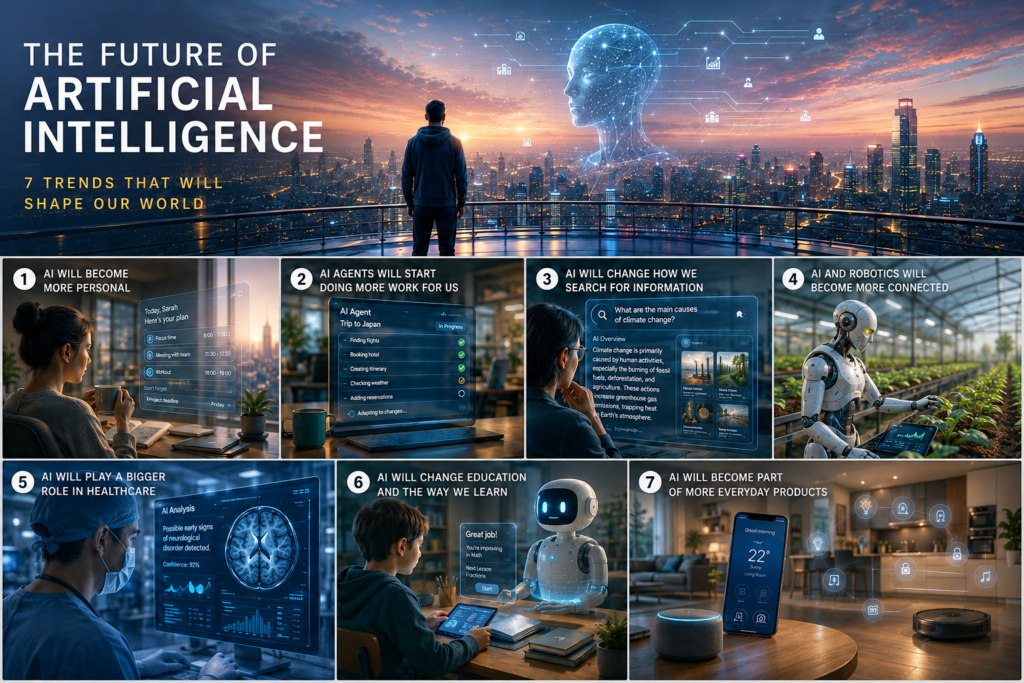
Artificial intelligence trends are transforming the world faster than ever. Artificial intelligence (AI) is no longer just a futuristic concept. It is already transforming the way we work, communicate, search for information, create content, and make decisions. What once seemed like science fiction is quickly becoming part of everyday life.
In this article, we’ll explore seven of the biggest artificial intelligence trends that are expected to shape the future and explain why they matter.
Table of Contents
1. AI Will Become More Personal

AI is already becoming part of our daily lives, but the next generation of AI will feel much more personal. Instead of offering the same experience to everyone, future AI assistants will learn from our habits, remember our preferences, and adapt to the way each of us works.
Imagine an AI assistant that already understands your daily routine. It reminds you of important tasks before you even ask and suggests useful information when you need it most. Rather than being just another app, it quietly works in the background, making everyday tasks a little easier.
Naturally, this kind of personalization also raises important questions. As AI learns more about us, protecting personal data and giving people control over their own information will be just as important as making these assistants smarter. Getting that balance right will be one of the biggest challenges as AI becomes part of everyday life.
2. AI Agents Will Start Doing More Work for Us
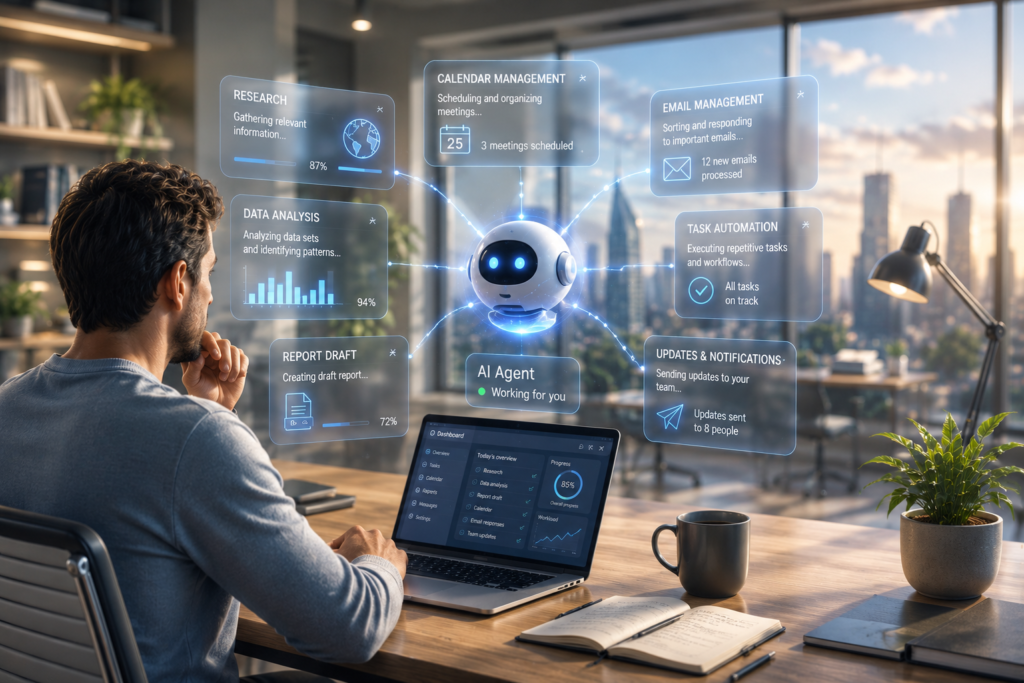
AI agents could completely change the way we use artificial intelligence. Instead of simply answering questions or generating text, they’ll be able to complete complex tasks, make decisions along the way, and handle multiple steps without constant human input.
Imagine planning a trip with an AI agent. Instead of spending hours searching for flights, comparing hotels, and organizing everything yourself, it could handle the entire process for you.
If prices change or your schedule shifts, it could even update the plan automatically. The same idea applies in the workplace. They could prepare reports, organize information, schedule meetings, and keep projects moving without needing instructions at every step. Rather than simply giving advice, they would actively help get the work done.
For many people, this could mean spending less time on repetitive tasks and more time focusing on creative or important work. Of course, these systems will also need clear boundaries. We’ll have to decide which decisions they can make on their own and when a human should always stay in control.
3. AI Will Change How We Search for Information
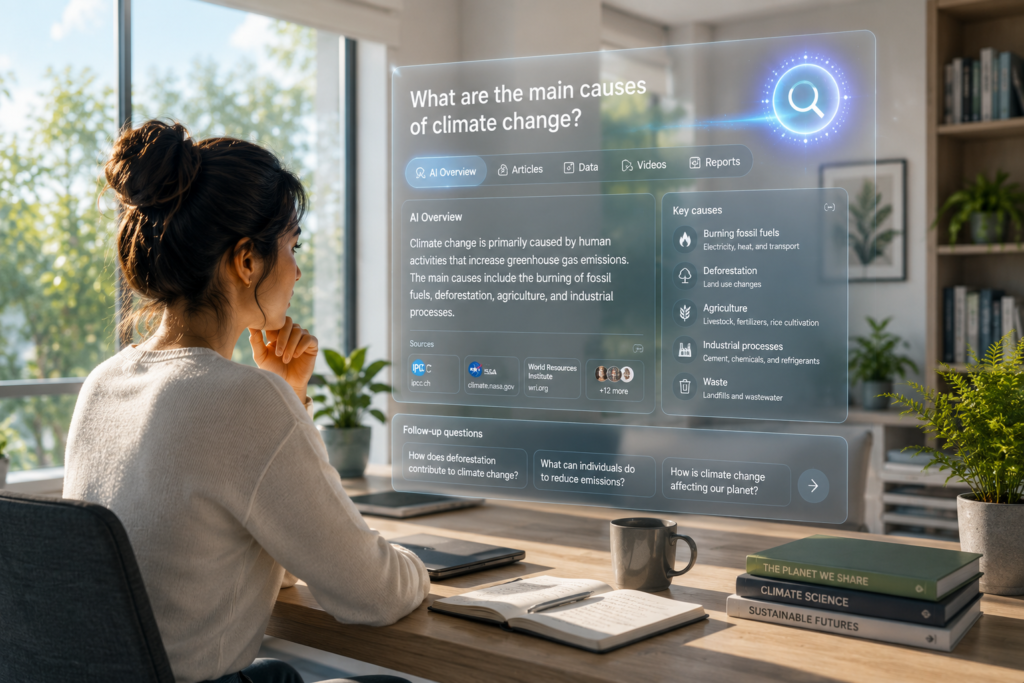
For years, searching online meant typing a few keywords and opening several websites. We often had to compare different sources before finding the answer we were looking for. Today, AI is starting to change that by letting us ask complete questions and receive more direct, organized answers.
Instead of jumping between dozens of webpages, people may increasingly rely on AI to summarize information, compare different perspectives, and better understand complex topics.
Of course, faster answers don’t always mean better answers. AI can still make mistakes, misunderstand context, or present outdated information with confidence. As AI-powered search becomes more common, checking where the information comes from will remain just as important as finding the answer itself.
4. AI and Robotics Will Become More Connected
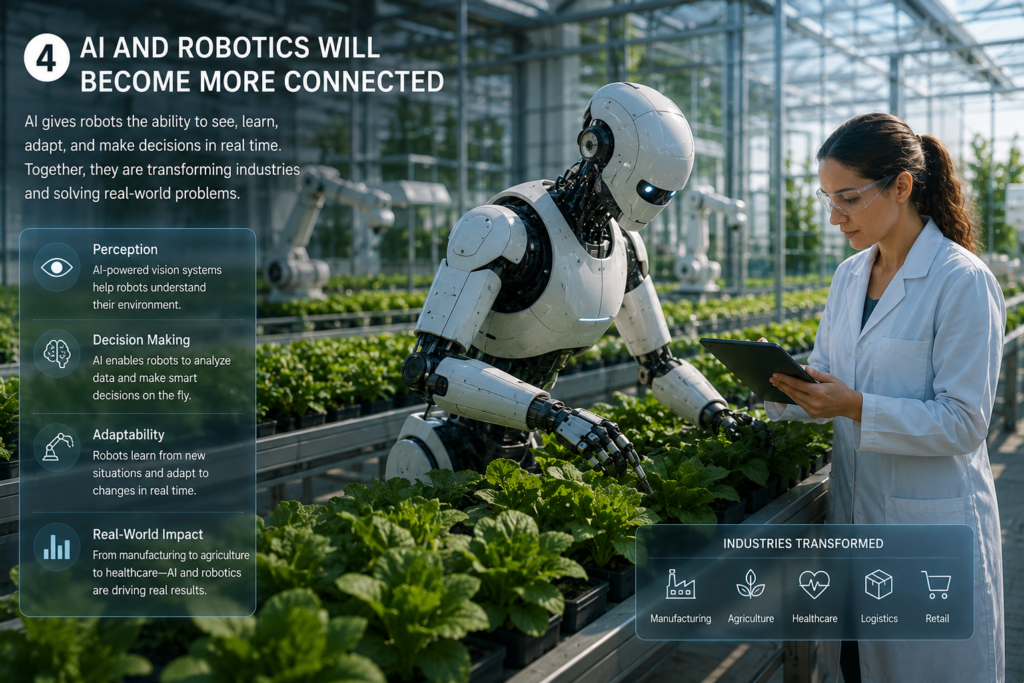
For a long time, artificial intelligence and robotics seemed like two separate worlds. AI lived mostly inside computers, while robots were designed to perform specific physical tasks. That line is now beginning to disappear. As AI systems become better at understanding their surroundings and making decisions, robots are becoming more adaptable to situations they were not specifically programmed for.
In practice, this could have an impact far beyond factories. We may see more capable robots helping in warehouses, hospitals, agriculture, and even in our homes. A robot that can understand instructions, recognize objects, and adapt to unexpected situations is far more useful than one that simply repeats the same programmed actions.
As these machines become more capable, however, the questions around them will also become more serious. Safety, cost, reliability, and the effect on certain jobs will all need to be considered. The biggest challenge won’t simply be building smarter robots, but deciding where they are genuinely useful and how they can work alongside people rather than simply replacing them.
5. AI Will Play a Bigger Role in Healthcare
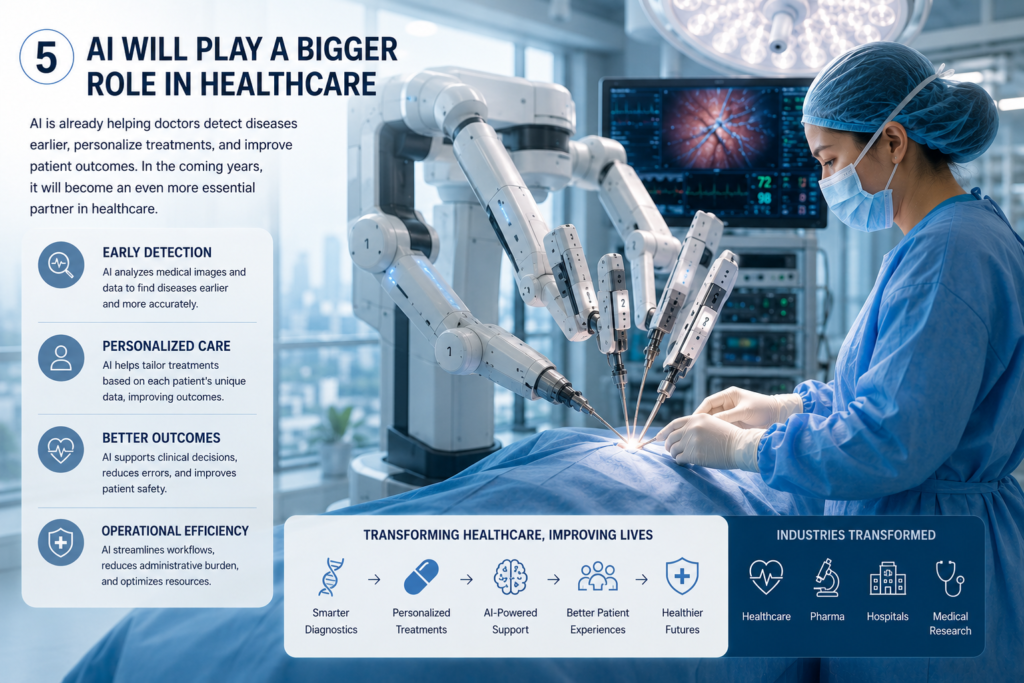
Artificial intelligence is already being used in healthcare, but its role is likely to grow significantly in the coming years. AI systems can analyze large amounts of medical data much faster than a person, helping doctors identify patterns that might otherwise be difficult to notice. This could lead to earlier diagnoses and help medical professionals make better-informed decisions.
Another area where AI could make a difference is personalized treatment. Two people with the same condition may respond differently to the same treatment, and AI could help doctors consider more information when deciding which treatment might work best for each patient. It could also reduce some of the administrative work that takes time away from caring for patients.
Still, healthcare is one area where mistakes can have serious consequences. AI should support doctors and medical professionals rather than simply replace their judgment. Questions about privacy, accuracy, responsibility, and the protection of sensitive medical data will become even more important as these technologies become more widely used.
6. AI Will Change Education and the Way We Learn
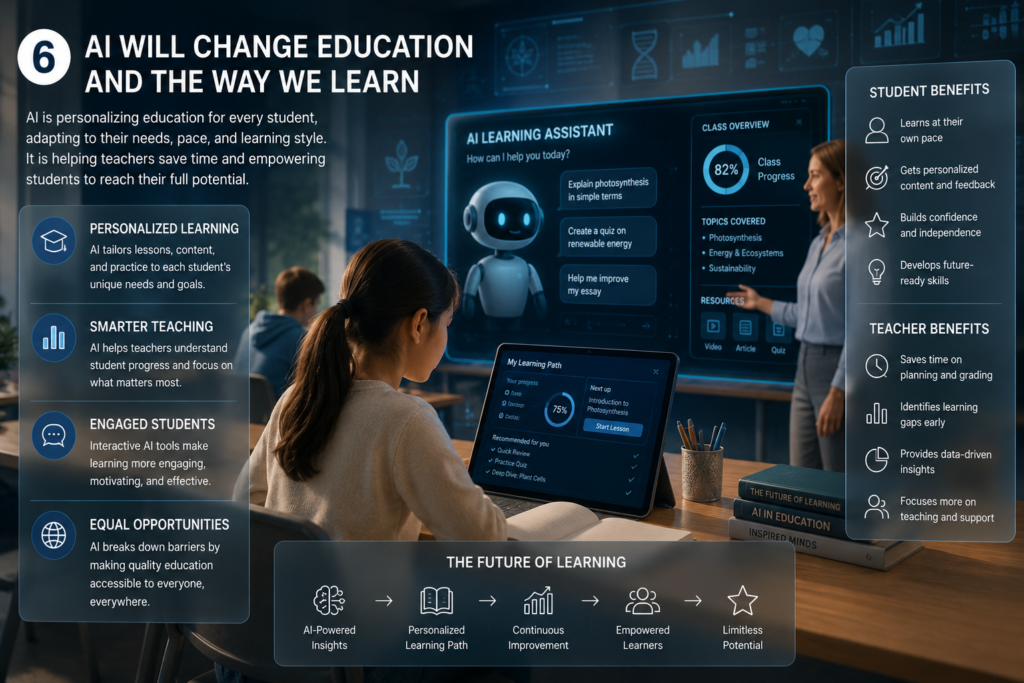
Education is another area where artificial intelligence could bring significant changes. Instead of every student following exactly the same learning path, AI tools could adapt lessons and exercises to individual needs. A student who is struggling with a particular subject could receive additional explanations, while someone progressing more quickly could move on to more challenging material.
For teachers, AI could also become a useful assistant. It may help prepare learning materials, organize information, create exercises, and handle some repetitive administrative tasks. This could give teachers more time to focus on what technology cannot replace: understanding their students, motivating them, and providing the human support that is essential for learning.
At the same time, using AI in education needs to be approached carefully. If students rely on it to do all the thinking for them, the technology could become a shortcut rather than a learning tool. The challenge will be finding the right balance—using AI to support learning without replacing the effort, curiosity, and critical thinking that make education truly valuable.
7. AI Will Become Part of More Everyday Products
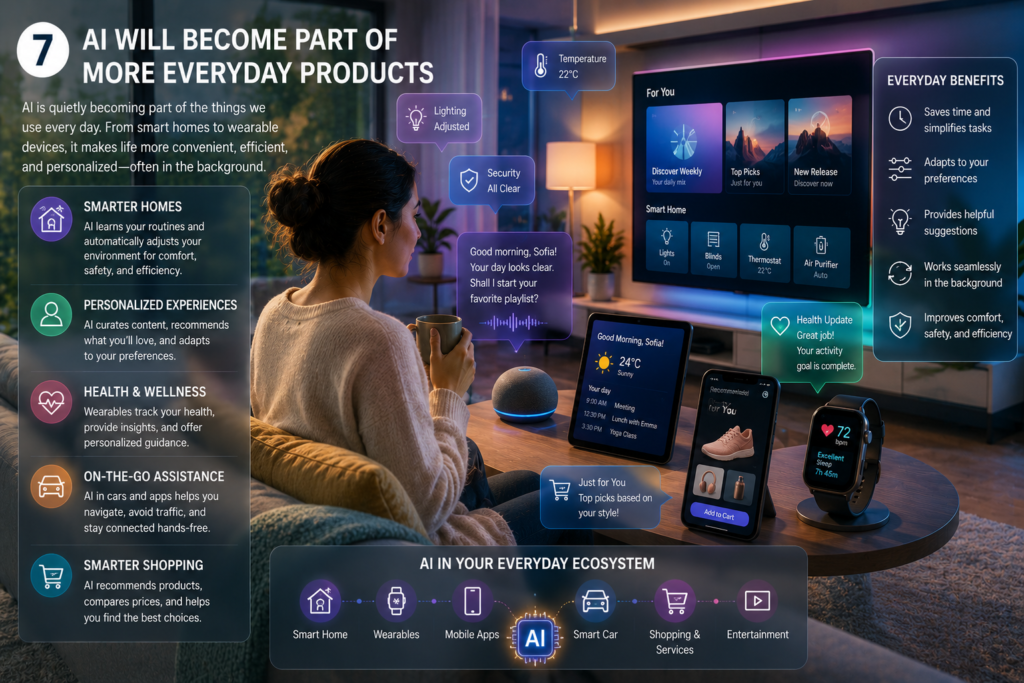
Artificial intelligence will probably become less visible as it becomes more common. Instead of thinking about AI as a separate tool that we deliberately open and use, it may increasingly work quietly inside the products and services we already use every day. Phones, cars, home appliances, software, and online services could all become smarter without us even thinking about the AI working behind them.
This could make everyday technology more convenient and responsive. Devices may learn how we use them, automate repetitive tasks, and adjust to our preferences over time. In many cases, people will benefit from artificial intelligence without needing to understand exactly how it works.
But as AI becomes more deeply integrated into everyday life, transparency will matter. People should have a reasonable understanding of when AI is being used and what happens to the data it collects. The future of AI will not only depend on how powerful the technology becomes, but also on whether people feel they can trust the systems that increasingly surround them.
The Future of AI Is Only Beginning
Artificial intelligence is evolving quickly, but predicting exactly where it will lead us is almost impossible. Some of these changes may happen sooner than expected, while others could take years to become part of everyday life. What seems clear is that AI will continue moving beyond simple chatbots and become more deeply connected to how we work, learn, search for information, receive healthcare, and interact with technology.
That does not mean every change will automatically be positive. The decisions made today about privacy, safety, transparency, and human control will influence how useful these technologies ultimately become. The most interesting question may not be how intelligent AI can become, but how we choose to use it.
These artificial intelligence trends will continue to reshape industries and everyday life over the coming years. To learn more about the latest advances in artificial intelligence, visit the OpenAI website.
We are still at the beginning of this transformation. As these artificial intelligence trends continue to evolve, they will shape how we work, communicate, and innovate over the coming years. If the last few years have taught us anything, it’s that artificial intelligence will continue to evolve faster than most of us expect.
Want to see how artificial intelligence is transforming the next generation of intelligent machines? Read our article The Future of Robotics: 7 Innovations to Watch to explore the biggest robotics innovations shaping the years ahead.
About Rydexora
Rydexora is an independent technology publication covering artificial intelligence, consumer technology, robotics, cybersecurity, software, and digital innovation. We create clear, accurate, and well-researched content that helps readers understand today’s technology, emerging trends, and the innovations shaping tomorrow.
3 Responses