
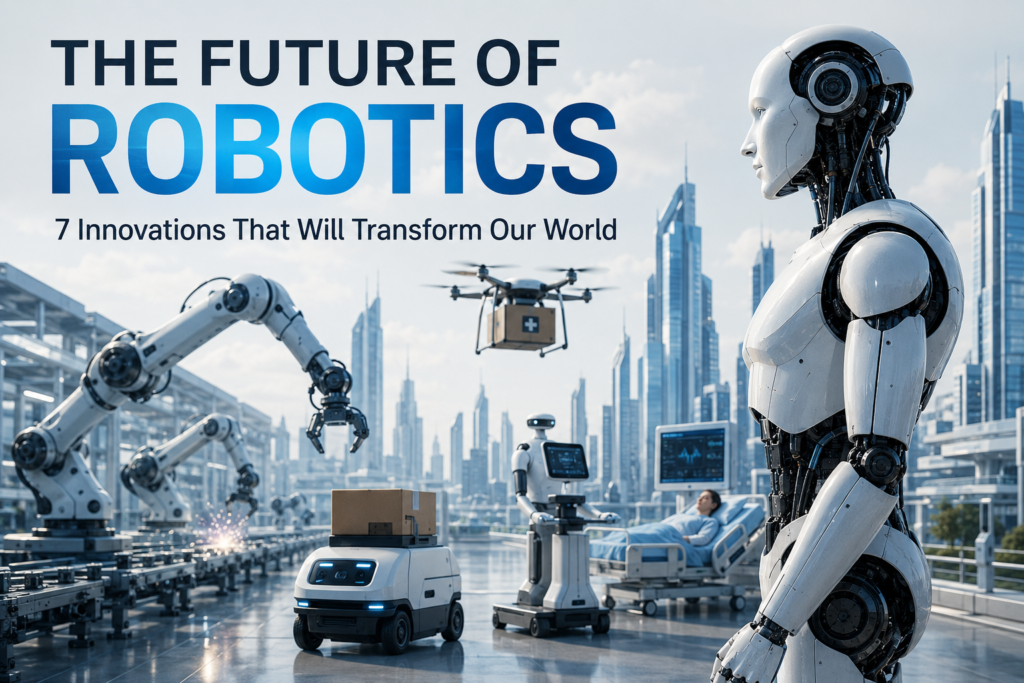
The future of robotics is no longer limited to science fiction. Robots are becoming smarter, more adaptable, and capable of performing tasks that once required human intelligence. From hospitals and factories to homes and space exploration, robotics is transforming industries and changing the way people live and work.
Rapid advances in artificial intelligence, machine learning, sensors, and automation have accelerated the development of modern robots. As these technologies continue to evolve together, robots are becoming more efficient, safer, and increasingly able to interact with people in everyday environments.
In this article, we’ll explore seven robotics innovations that are expected to shape the future, explaining how they work, where they are already making an impact, and why they could redefine our relationship with technology in the years ahead.
Table of Contents
Humanoid Robots Will Become More Useful
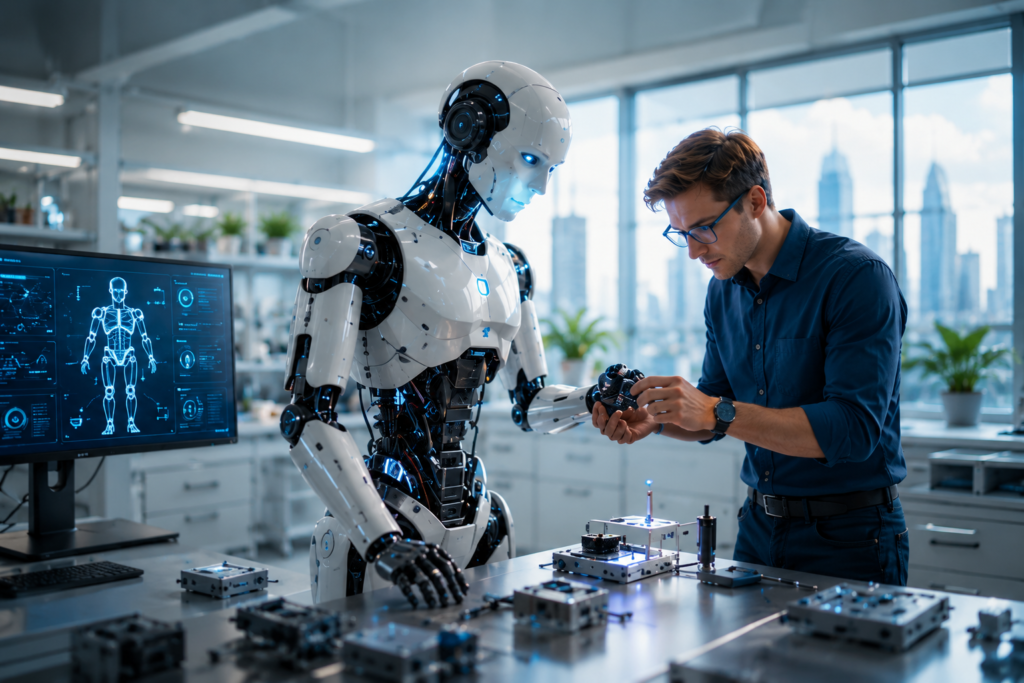
Humanoid robots have become one of the most recognizable symbols of modern robotics. Designed to resemble the human body, these machines can walk, use tools, interact with people, and perform tasks in environments originally built for humans. Unlike traditional industrial robots that repeat the same movement inside factories, humanoid robots are being developed to adapt to changing situations and work alongside people.
Recent advances in artificial intelligence, computer vision, and sensor technology have dramatically improved what humanoid robots can do. They can recognize objects, understand voice commands, maintain balance while walking, and even learn from experience. Leading technology companies around the world are investing heavily in this technology with the goal of creating robots that can assist in manufacturing, logistics, healthcare, and customer service.
Although humanoid robots are still expensive and face technical challenges, their capabilities continue to improve every year. As hardware becomes more affordable and AI systems become more advanced, these robots are expected to play an increasingly important role in workplaces and public spaces. Their rapid evolution reflects a broader transformation in robotics, where advances in artificial intelligence are making machines smarter, more adaptable, and increasingly capable of working alongside humans.
AI and Robots Will Work Together
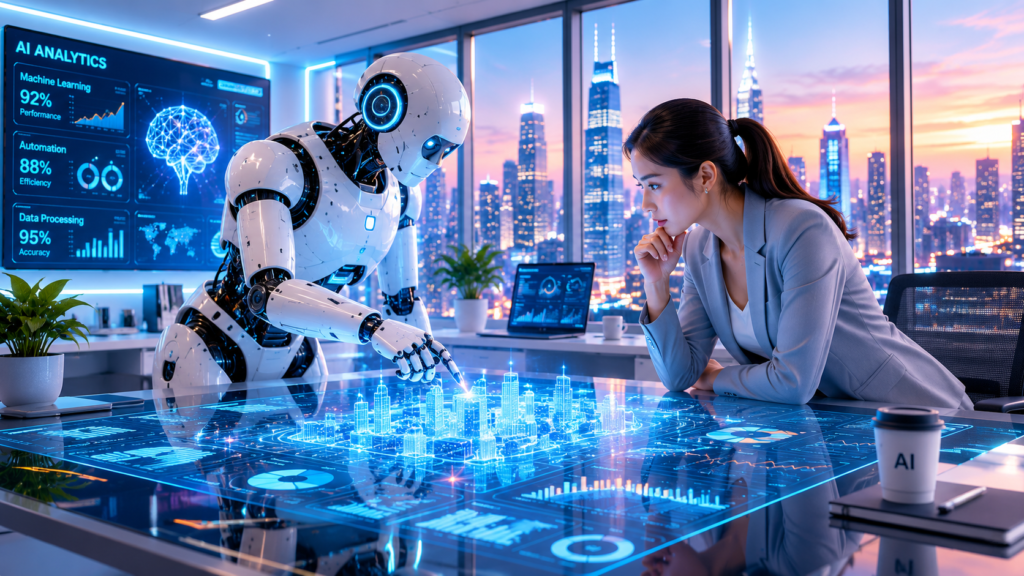
Artificial intelligence has become the driving force behind the latest generation of robots. Instead of following a fixed sequence of programmed instructions, modern robots can analyse their surroundings, recognise objects, understand spoken commands, and adapt their behaviour to changing situations. This flexibility allows robots to perform increasingly complex tasks with minimal human intervention.
Machine learning plays a central role in this evolution. By processing vast amounts of data, robots continuously improve their performance, make fewer mistakes, and respond more effectively to unfamiliar environments. Combined with computer vision and advanced sensors, artificial intelligence enables robots to make decisions that would have been impossible only a few years ago.
As AI technology continues to advance, robots will become more autonomous across industries such as manufacturing, healthcare, agriculture, and logistics. Rather than replacing every human worker, the most successful future will likely involve people and intelligent robots working together, combining human creativity with machine precision and efficiency.
Robots Will Transform Healthcare
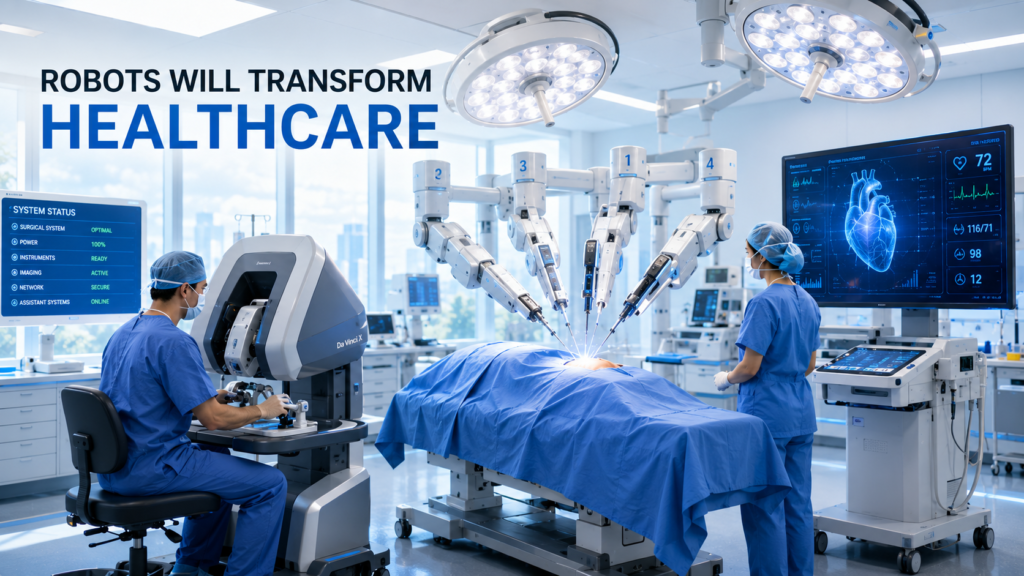
Healthcare is becoming one of the industries most influenced by modern robotics. Hospitals around the world already use robotic systems to assist surgeons, transport medical supplies, disinfect rooms, and support patient rehabilitation. These technologies help improve precision, reduce human error, and allow healthcare professionals to focus more on patient care.
One of the most significant advances is robotic-assisted surgery. These systems allow surgeons to perform delicate procedures with greater accuracy and smaller incisions, often reducing recovery times for patients. In rehabilitation, robotic exoskeletons are helping people regain mobility after injuries or neurological conditions, while AI-powered diagnostic tools assist doctors in detecting diseases earlier.
Although robots will never replace the expertise and compassion of healthcare professionals, they are becoming valuable partners in modern medicine. As robotics and artificial intelligence continue to evolve, hospitals are expected to rely even more on intelligent systems that improve efficiency, safety, and patient outcomes.
Robots Will Transform Industry and Manufacturing
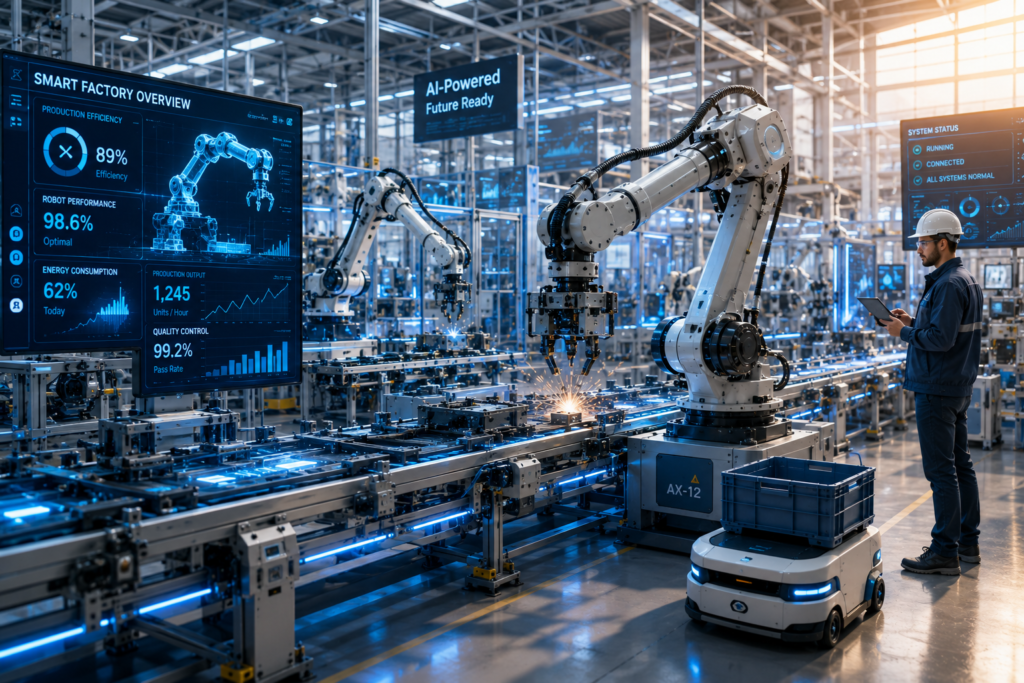
Factories have always been at the forefront of robotics, but today’s industrial robots are becoming smarter, faster, and far more flexible than previous generations. Modern manufacturing facilities use intelligent robotic systems to assemble products, inspect quality, transport materials, and operate continuously with remarkable precision. These technologies help companies increase productivity while reducing waste and operational costs.
Unlike traditional industrial robots that repeated the same movement thousands of times, modern systems can analyse data, adapt to changing production requirements, and even collaborate safely with human workers. This new generation of collaborative robots, often called cobots, is transforming manufacturing by making automation more accessible to companies of all sizes.
As robotics continues to evolve, factories are expected to become increasingly connected through artificial intelligence, cloud computing, and the Industrial Internet of Things (IIoT). Rather than replacing people entirely, intelligent automation will allow workers to focus on supervision, problem-solving, and higher-value tasks that require creativity and experience.
Robots Will Become Part of Everyday Life
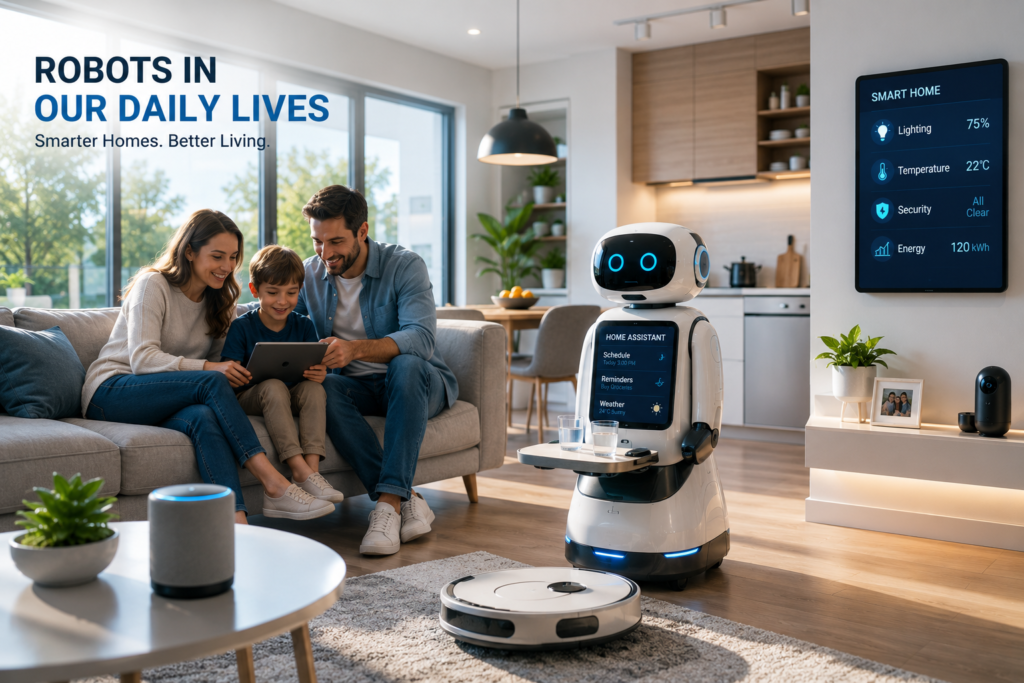
Robots are gradually moving beyond factories and hospitals into homes, schools, offices, and public spaces. From robotic vacuum cleaners and lawn mowers to intelligent delivery robots and personal assistants, automation is becoming part of everyday life. As these technologies become more affordable, more households will benefit from machines designed to simplify routine tasks.
Future home robots are expected to assist with a wide range of daily activities, including cleaning, home security, elderly care, and even basic household organisation. Powered by artificial intelligence, these systems will learn user preferences, recognise family members, and adapt to changing routines, making them increasingly useful over time.
Although fully autonomous home robots are still developing, the trend is clear. Advances in robotics, sensors, and AI will continue making intelligent machines more practical, reliable, and accessible. Over the coming years, robots are likely to become as common in many homes as smartphones and smart speakers are today.
Challenges and Ethical Questions
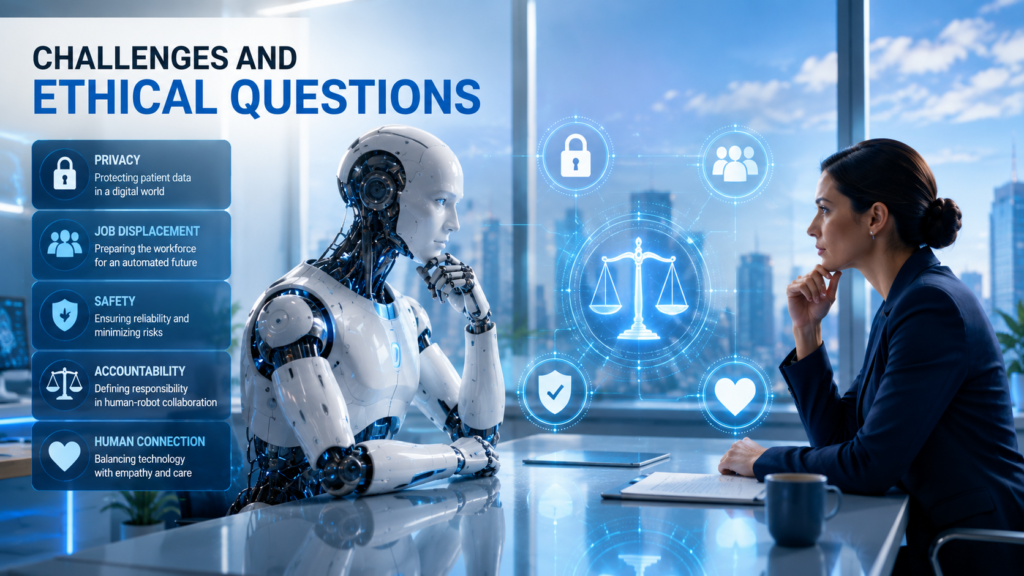
Despite their enormous potential, robots also raise important ethical and social questions. As intelligent machines become more capable of making decisions, concerns about privacy, cybersecurity, and data protection continue to grow. Connected robots often collect large amounts of information, making security a critical priority for both manufacturers and users.
Another important challenge is the impact of automation on employment. While robotics is expected to create new opportunities in engineering, software development, maintenance, and AI, some repetitive jobs may gradually disappear. Governments, businesses, and educational institutions will need to invest in training programs that help workers adapt to new technologies and changing job markets.
Building public trust will be just as important as developing more advanced robots. Clear regulations, transparent AI systems, and responsible innovation will help ensure that robotics continues improving people’s lives while respecting safety, privacy, and ethical standards. To learn more about international AI governance, visit the OECD AI Principles. The future of robotics will ultimately depend not only on technological progress, but also on how society chooses to use it responsibly.
Conclusion
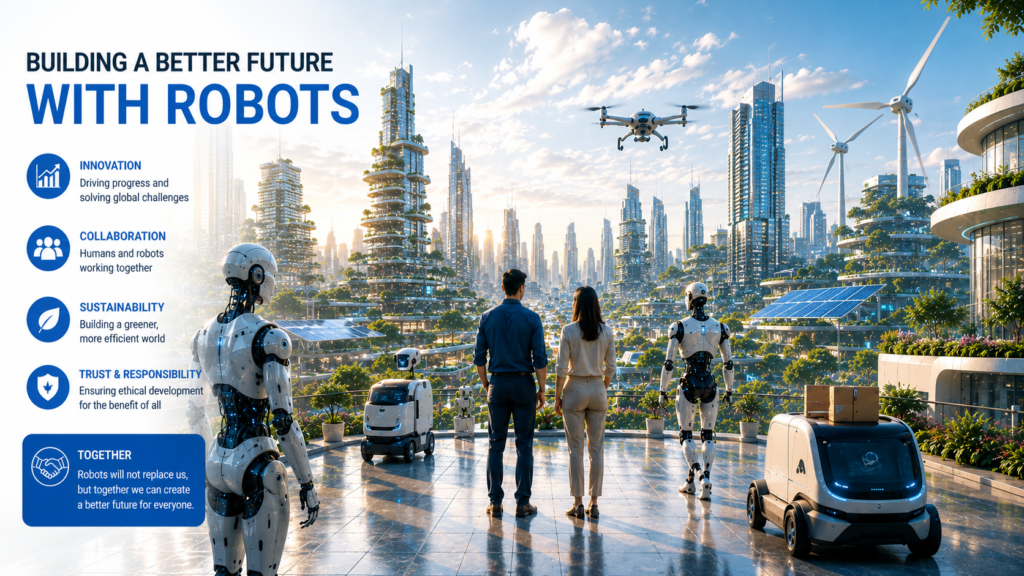
The future of robotics is evolving faster than ever, transforming industries, healthcare, manufacturing, and everyday life. Powered by advances in artificial intelligence, machine learning, and automation, robots are becoming smarter, safer, and more capable of working alongside people rather than simply replacing them.
While important challenges related to ethics, privacy, cybersecurity, and employment remain, the future of robotics is full of opportunities. The decisions made by researchers, businesses, governments, and society today will shape how these technologies improve our lives in the years ahead.
The future of robotics will become an increasingly important part of our lives. Understanding these developments today helps us prepare for a world where intelligent machines and humans work together to solve problems, improve productivity, and create new possibilities across every industry.
If you’re interested in how artificial intelligence is driving the next generation of robots, read our article The Future of Artificial Intelligence: 7 Trends That Will Shape Our World.
About Rydexora
Rydexora is an independent technology publication covering artificial intelligence, consumer technology, robotics, cybersecurity, software, and digital innovation. We create clear, accurate, and well-researched content that helps readers understand today’s technology, emerging trends, and the innovations shaping tomorrow.
2 Responses